
Improve
Optimize the microtopography of your stainless steel surfaces to improve their cleanability and corrosion resistance in pharmaceutical and high-purity environments.
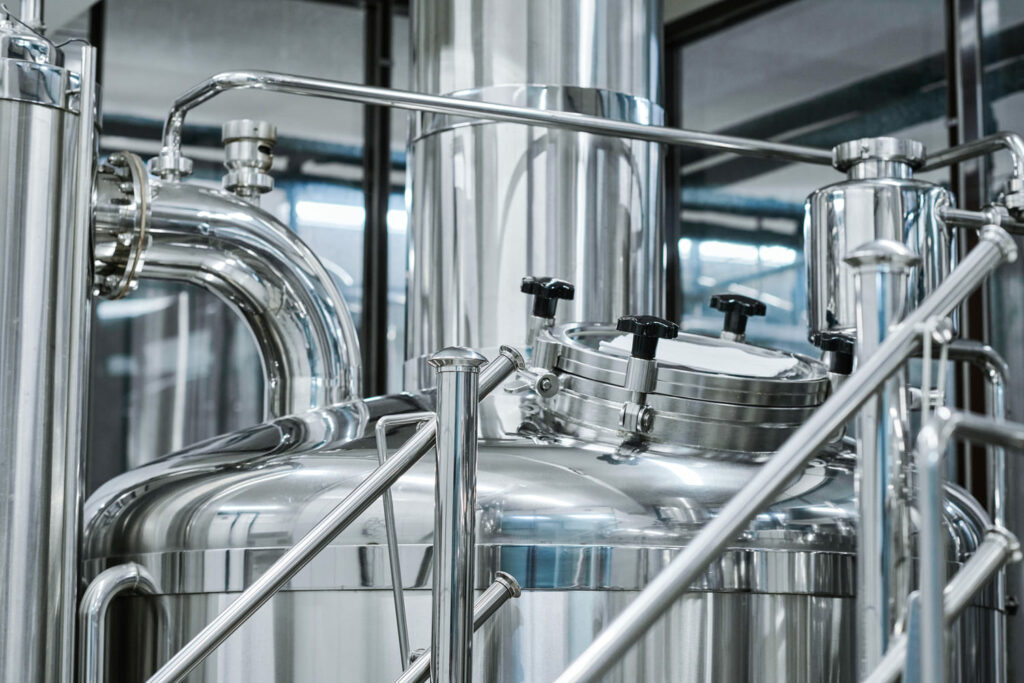
Electropolishing is a controlled anodic dissolution process. It removes metal electrochemically and can reduce microscopic asperities without mechanical abrasion. It is particularly used on austenitic stainless steels such as 316L, found in pharmaceutical and high-purity equipment.
The Challenges
01
Reduce microscopic asperities through controlled electrochemical dissolution and homogenize the surface.
02
Minimize irregularities and microscopic retention zones that can trap residues and contaminants.
03
Achieve a clean, homogeneous surface that supports the passive properties of stainless steel.
Your need
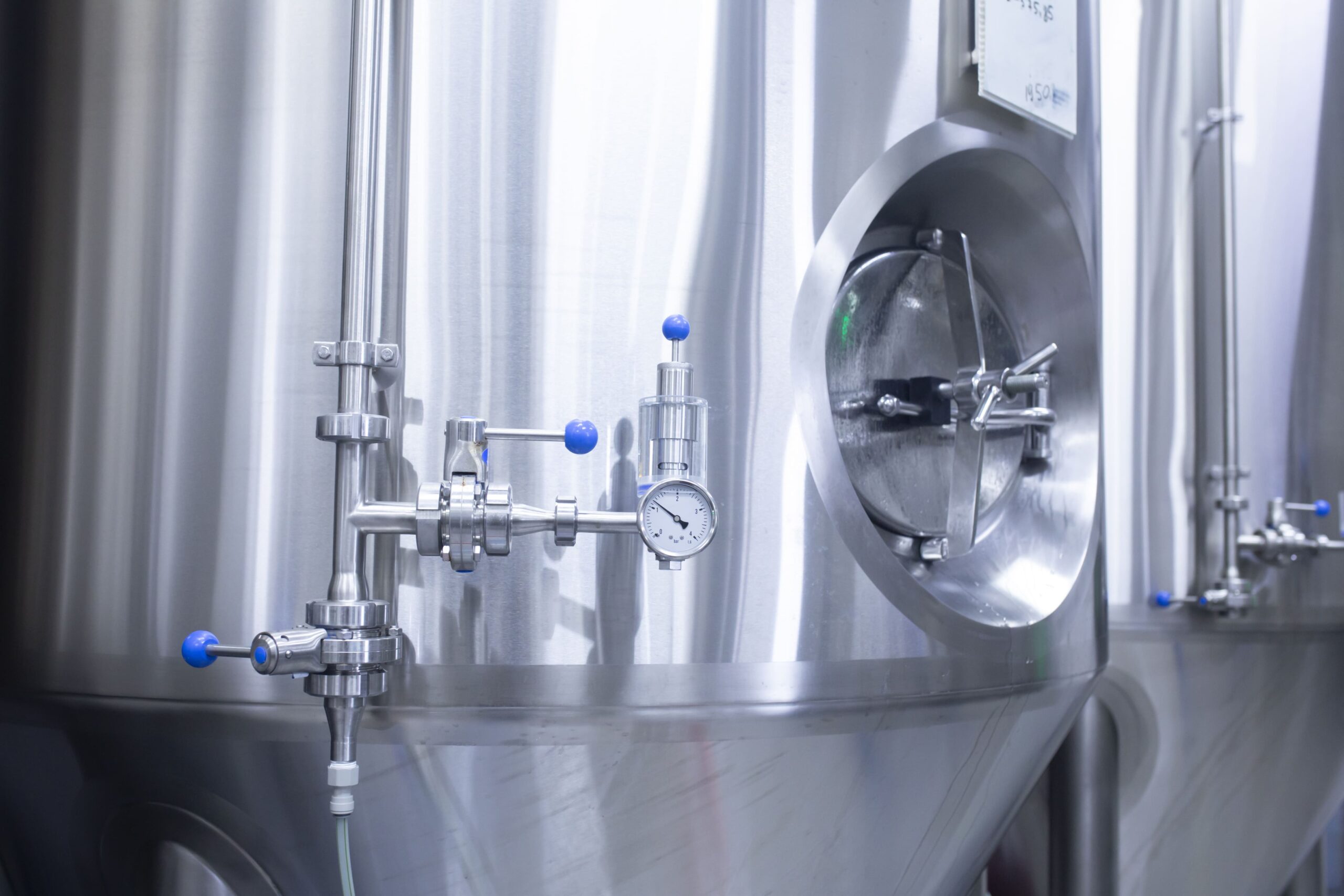
Technochim defines the process according to the stainless steel grade, initial condition, part or equipment geometry, and application requirements. Mastery of chemistry and electrochemical parameters enables treatment adaptation to the desired surface finish and characterization of the result.
Our approach
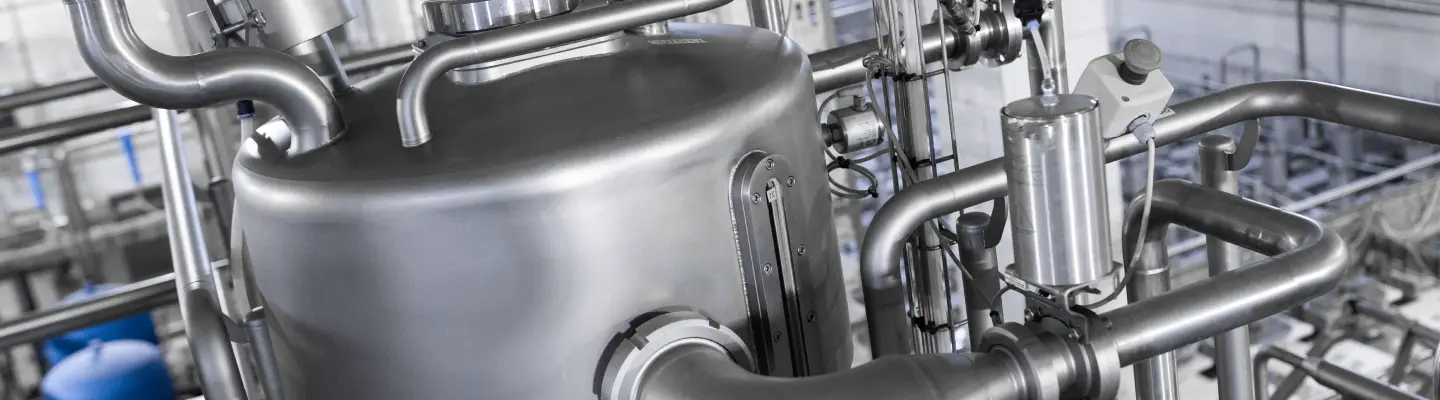
The result of electropolishing depends on the stainless steel grade, initial condition, geometry, and process parameters. Technochim defines the treatment based on the equipment, its use, and the desired surface characteristics.
01
Characterize the surface
Identify the stainless steel grade, initial condition, geometry, and finishing requirements.
02
Prepare the surface
Define the cleaning and preparation operations required before electropolishing.
03
Master electropolishing
Adapt chemistry and electrochemical parameters to achieve the desired material removal and surface finish.
04
Verify the result
Inspect and document the final condition according to criteria defined for the equipment and its application.
Understanding electropolishing
In pharmaceutical and high-purity applications, surface characterization is not limited to visual appearance.
Ra is a roughness parameter calculated on a profile. Two surfaces with comparable Ra values may nevertheless have different three-dimensional reliefs.
Technochim can supplement this measurement with 3D observation and Sdr (developed interfacial area ratio). Expressed as a percentage, this parameter characterizes the additional area related to the measured relief compared to the projected area.
The complementarity between Ra, Sdr, and three-dimensional observation enables precise characterization of the surface condition and its evolution after electropolishing.
Comparison of measurements before and after treatment thus quantifies the evolution of microtopography and provides objective proof of the finishing quality achieved by electropolishing.
In the workshop, immersion electropolishing enables treatment of parts and components whose dimensions and geometry are compatible with the treatment facilities.
For tanks and equipment that cannot be immersed, Technochim can also study an on-site localized electropolishing intervention.
The process includes surface preparation, electropolishing, rinsing, and inspections defined according to the application and project requirements.
Stainless steel process tanks
Process piping and components
Production equipment
High-purity equipment
Stainless steel parts and components with complex geometry
Technochim Expertise
Technochim combines knowledge of stainless steels, mastery of chemistry, electrochemical processes, and surface characterization. This combination enables treatment adaptation to the equipment and the requirements of pharmaceutical and high-purity environments.
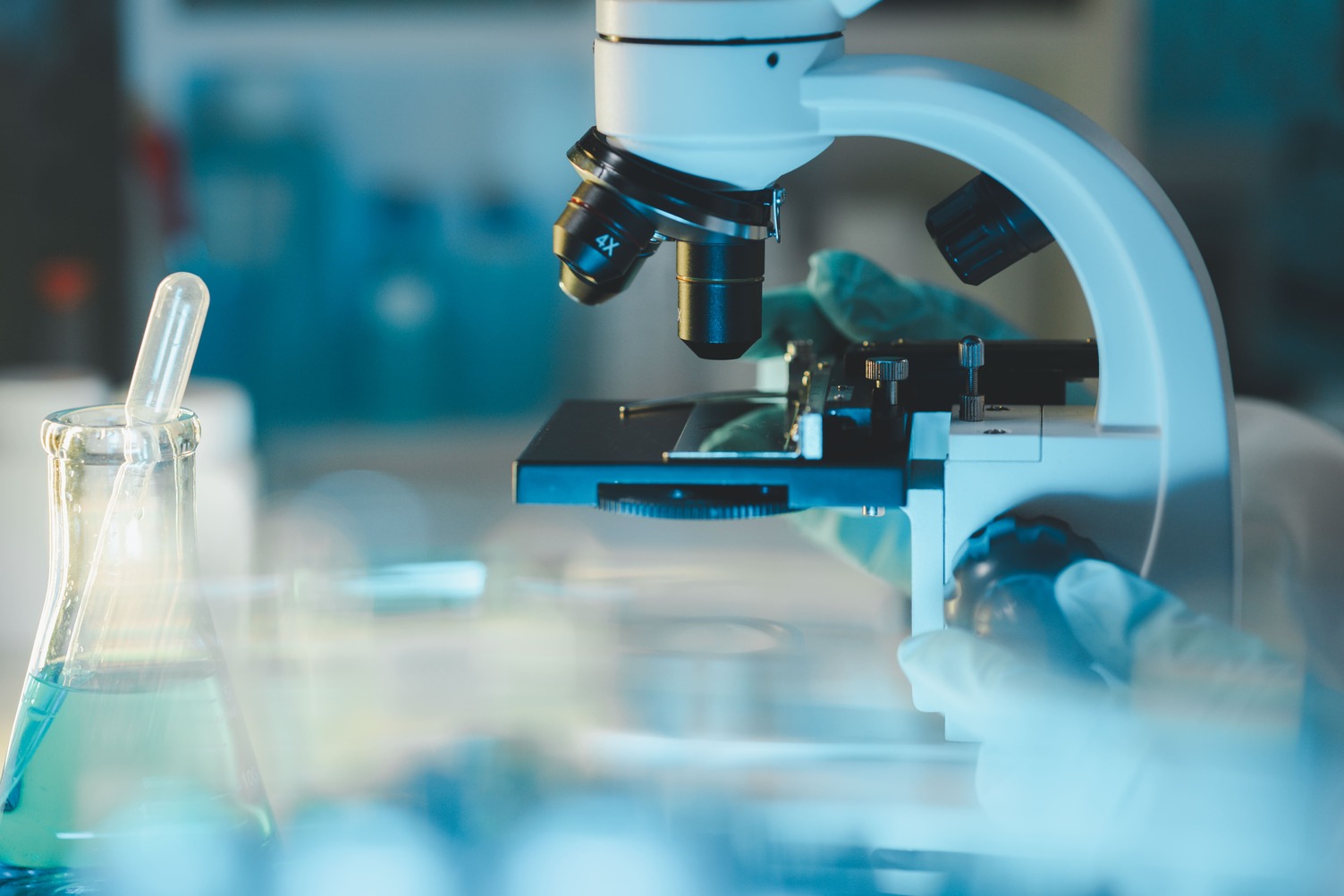
These elements will enable preparation of a technical discussion with Technochim.